
Nobody hopes to need a tooth extraction. In many cases, dentists can preserve a damaged tooth with treatments such as a filling, crown, root canal, or periodontal therapy. Sometimes, however, a tooth is too damaged, infected, or poorly supported to remain healthy. Removing it may then be the safest way to protect the surrounding teeth, gums, and jawbone.
The decision to extract a tooth should be based on its condition and the options available to treat it. A dental or periodontal evaluation can help determine whether the tooth can still be saved or whether removal is the better choice. If extraction is recommended, it is also worth discussing what happens afterward, including healing, bone preservation, and possible tooth replacement.
Why a Tooth Sometimes Needs to Come Out
An extraction is a treatment, not a punishment. When a tooth is beyond repair or is actively harming the structures around it, removing it can be the safest path forward. The reasons clinicians recommend removal tend to fall into a few familiar categories.
- Decay or a fracture that leaves too little healthy structure for a filling, crown, or root canal to hold onto.
- An infection that has moved beyond the tooth itself into the surrounding bone or soft tissue.
- Advanced gum disease that has weakened the support around a tooth, leaving it loose or uncomfortable.
- Crowding or pressure on neighboring teeth, which includes wisdom teeth that cannot be maintained or kept clean.
- A tooth that has already been treated once, such as a root canal that cannot reasonably be redone.
Each of those situations is evaluated differently, and none of them automatically means the tooth has to go. What they share is a common question: can the tooth be restored in a way that lasts and keeps the rest of the mouth healthy?
Gum Disease, Bone Loss, and Loose Teeth
Not every extraction starts with a cavity. Gum disease is one of the quieter reasons a tooth can reach the point of removal. When periodontal disease progresses, the tissue and bone that anchor teeth can be affected. A tooth that once felt solid may begin to move slightly, and a dentist or periodontist may describe it as mobile.
A periodontal exam looks at the health of the gums and the bone supporting each tooth, which is a different view than a standard checkup for cavities. That evaluation answers the question that matters most in these cases: is there enough support left for the tooth to function, or is the surrounding bone already compromised?
When the answer points toward removal, the same examination also guides what comes next. A periodontal practice handles the removal and the rebuilding in one place, which tends to make the sequence easier to follow.
When Saving the Tooth Is Still the Better Option
Removal is not the default answer for a problem tooth. Deep decay can often be treated with a root canal and a crown. A tooth affected by gum disease may be stabilized with periodontal treatment in some cases. Before scheduling an extraction, it is reasonable to ask whether any of those options are open to you.
Several factors usually decide it:
- How much healthy tooth structure remains above and below the gumline.
- Whether the infection can be controlled with treatment.
- The condition of the gums and bone that hold the tooth.
- How the tooth fits into your bite and how much work it does when you chew.
- What the alternatives involve in terms of appointments, procedures, and long-term maintenance.
When several of those factors point the same direction, the recommendation becomes clearer. A second opinion is a reasonable step if you are unsure, and any clinician offering one should be willing to explain the reasoning in plain language.
Planning Ahead for Replacement
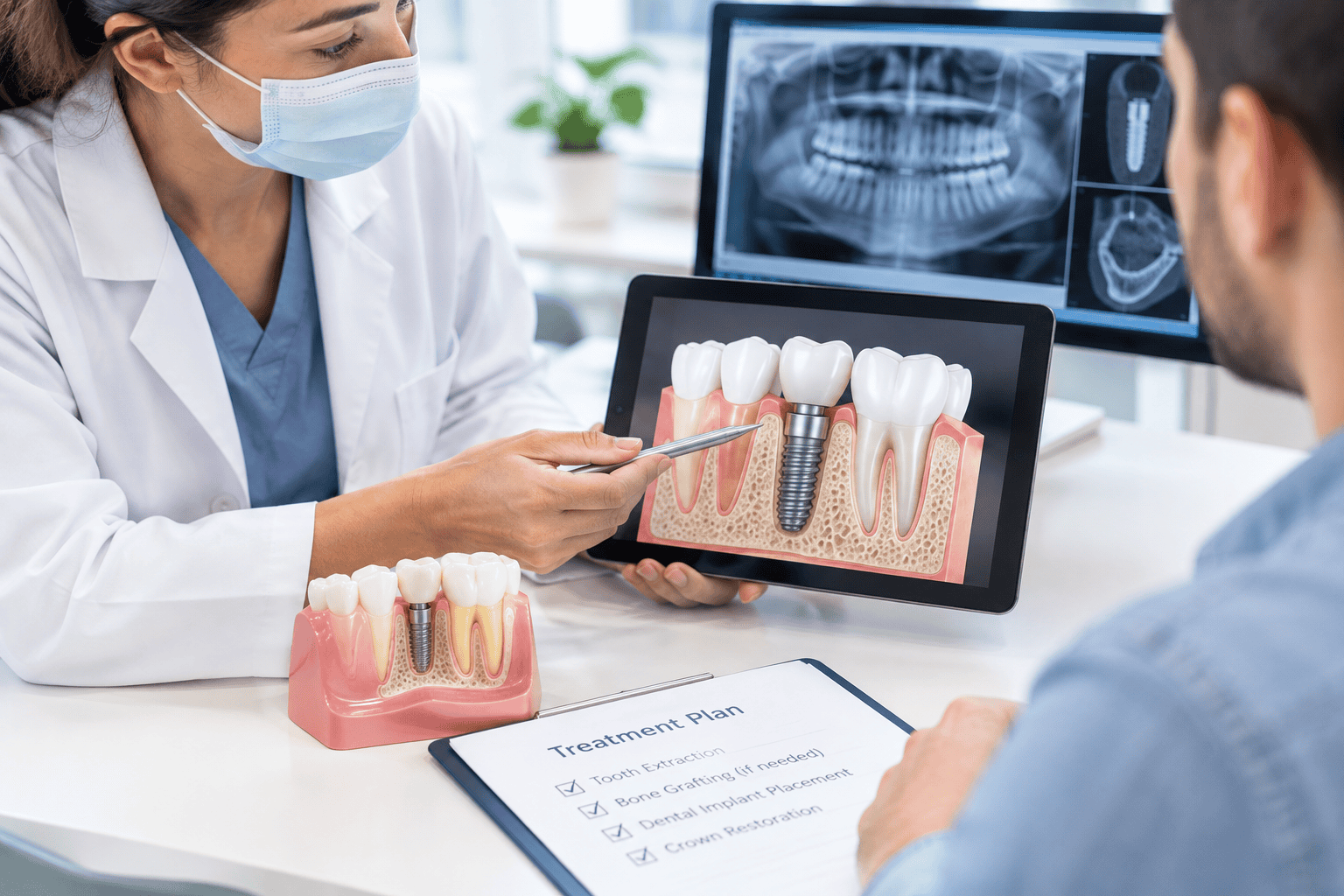
One of the most useful things about treating an extraction as part of a larger plan is that it removes the surprise later. The bone in the area of a removed tooth can change over time, and that change affects what replacement options work well. For that reason, many patients discuss replacement before the tooth ever comes out.
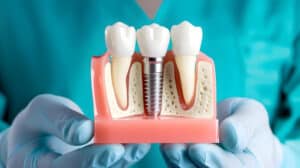
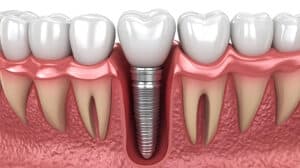
At a periodontal practice, that conversation can include bone grafting, dental implants, and guided implant surgery. Whether grafting is appropriate, and when an implant can be placed, depends on the infection, the bone that remains, and your general health. Some patients leave with a clear sequence of steps. Others leave with a plan to heal first and decide later. Either way, knowing the roadmap ahead of time is easier than learning it after the fact.
What a Periodontal Practice Brings to an Extraction
A general dentist handles a great many extractions, and for straightforward cases that works well. Complex situations, though, often benefit from a specialist’s training. West Periodontics & Dental Implants is a periodontal specialty practice in Timonium, MD, led by board-certified periodontists who focus on the diagnosis and treatment of gum disease, gum recession, and jawbone concerns.
That background matters in a few practical ways. A periodontist can evaluate the bone and gum support around a tooth before removal, perform the extraction when it is needed, and then handle the grafting and implant planning that follow. For patients who are also dealing with gum disease or jawbone deterioration, having one team responsible for the whole picture reduces the number of handoffs. Referring general dentists in the area can also stay involved, which keeps your records and your regular care connected.
Before You Schedule: Questions Worth Asking
The more you understand before the appointment, the calmer the process tends to be. Bring these questions with you.
- Is this tooth savable, and if so, what would that treatment involve?
- Who will perform the extraction, and what does that clinician specialize in?
- What type of sedation or anesthesia will be used, and how should I prepare?
- Will bone grafting be recommended, and how does that affect the timeline for replacement?
- What does my insurance cover, and what will I be responsible for?
- What does aftercare look like, and who do I call if something feels wrong?
If a practice cannot answer these clearly, that is useful information too.
Aftercare Basics That Protect Your Healing
Follow the written instructions you receive, even if they seem obvious. Keep the area clean, avoid smoking, and take any prescribed medication exactly as directed. Most offices ask you to avoid disturbing the healing site and to call if you notice worsening pain, swelling, or fever rather than waiting for a scheduled follow-up.
Plan for a quiet day and arrange a ride if sedation is involved. Keep your follow-up appointments, particularly if grafting or implant treatment was part of the plan. And if anything feels off in the days afterward, make the call. Offices would rather hear from you early than manage a problem that could have been simple.
Finding Extraction Care in the Timonium Area
Choosing where to have a tooth extracted involves more than finding the closest dental office. The right provider depends on why the tooth needs to be removed, the condition of the surrounding gums and bone, and whether you may need additional treatment afterward.
For patients dealing with gum disease, tooth mobility, or concerns about the jawbone, West Periodontics & Dental Implants can evaluate the tooth and the supporting structures before recommending extraction. As a periodontal specialty practice in Timonium, the team can also discuss treatment options that may follow an extraction, such as bone grafting or dental implants, when appropriate.
Before scheduling, ask what is causing the problem, whether the tooth can be saved, and what your treatment options are. If extraction is recommended, ask how the area will be managed during healing and whether you may need a replacement tooth later.
A consultation with West Periodontics & Dental Implants can help you understand why extraction may be recommended and what the next steps could look like.
Frequently Asked Questions
Is a tooth extraction painful?
The area is numbed before a tooth is removed, so most patients describe pressure and movement rather than sharp pain during the procedure. Soreness afterward is expected and is usually managed with the medications and instructions your clinician provides. Mention anxiety or past difficult dental experiences in advance, because extra comfort measures can often be arranged.
How do I know if a tooth can still be saved?
Ask directly what is limiting the tooth’s chances. Factors include how much healthy tooth structure remains, whether infection has reached the surrounding bone, and how much support the gums provide. Root canal treatment, a crown, or periodontal therapy can rescue some teeth. If more than one clinician gives you the same explanation, that consistency is a useful signal.
Can an extraction and a dental implant be planned together?
Sometimes the sequence is mapped out in advance, which is why a periodontal practice may discuss bone grafting at the same time as an extraction. Whether grafting is needed, and when an implant can be placed, depends on the infection, the bone available, and your overall health. A consultation is the only way to get a plan specific to you.
Will dental insurance cover a tooth extraction in Timonium?
Dental insurance coverage for a tooth extraction depends on your specific plan and benefits. Many plans provide some coverage for medically necessary extractions, but coverage can vary for procedures such as bone grafting or dental implants. Before scheduling treatment, check your benefits or contact your insurance provider to understand what is covered, what your out-of-pocket costs may be, and whether the dental practice is in network.
How soon should I call about a painful or loose tooth?
Call as soon as you notice a problem, especially with swelling, a bad taste, or pain that wakes you at night. Local offices in the Lutherville-Timonium area advertise emergency and same-day appointments, so ask what is available. Waiting can allow an infection to spread and can limit the treatment options still open to you.