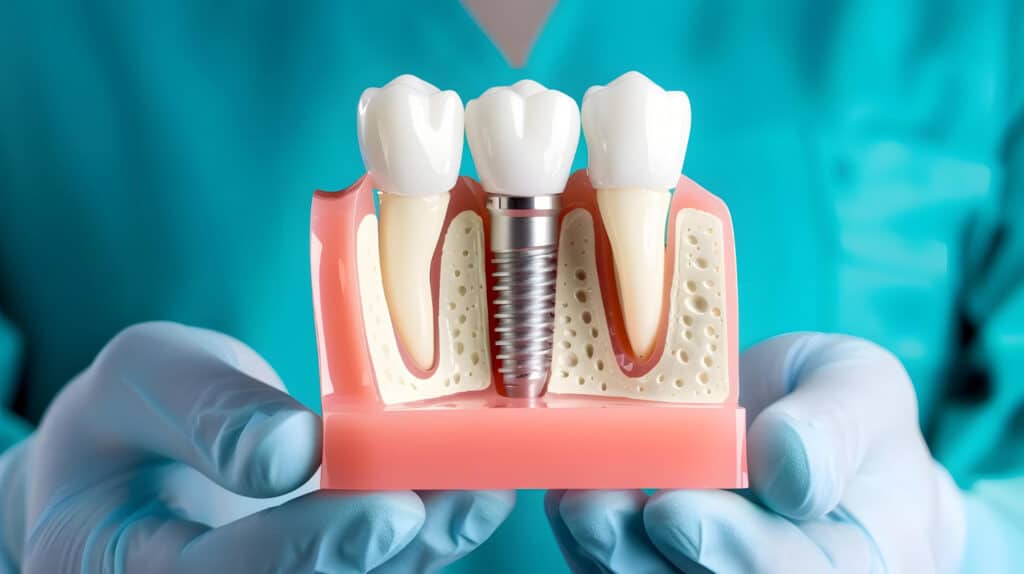
Hearing that you need a bone graft before dental implants can feel like a setback. You were expecting a new tooth, and now there is another procedure on the schedule. The important thing to understand is that grafting is rarely a detour. It is usually the step that makes the implant possible in the first place, because an implant needs a certain amount of solid bone around it to hold steady for years of chewing.
Not everyone needs one. Plenty of patients in the Timonium and Lutherville area have enough bone for implant placement right away. The only reliable way to know which group you fall into is a clinical exam with imaging, which is why a periodontist will typically ask about your dental history, look at the site, and review a scan before recommending anything.
Why a Dental Implant Needs Solid Bone
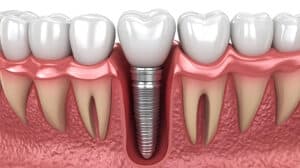
A dental implant is a post that is placed into the jawbone and left to fuse with the surrounding tissue. That fusion is what allows the implant to support a crown the way a natural tooth root does. When bone density is low, there may not be enough solid structure to anchor the implant, and a patient may only learn this during treatment planning or even mid procedure.
Patients describe this experience in different ways. One person who went through implant treatment reported being told a graft was necessary because of a lack of bone density. In the dental literature, alveolar bone regeneration is described as frequently necessary before implants are placed. Those two statements point at the same reality: the bone is the foundation, and the implant is only as stable as what surrounds it.
When a Bone Graft Is Typically Recommended
Your periodontist is looking for sites where the bone has shrunk, healed unevenly, or was never tall or wide enough to begin with. Common situations that trigger a grafting recommendation include:
- Bone loss after a tooth was removed, especially if the extraction happened some time ago
- Advanced gum disease, which can break down the bone that supports teeth
- A long gap since the tooth was lost, giving the ridge time to resorb
- Upper back teeth, where the sinus cavity sits close to the roots
- Infection or a failed tooth that left a defect in the ridge
These are the scenarios that come up most often during implant consultations. A site can look fine on the surface and still be too thin underneath, which is why a visual check alone is not enough to clear someone for surgery.
Ridge Preservation: The Graft That Happens at Extraction
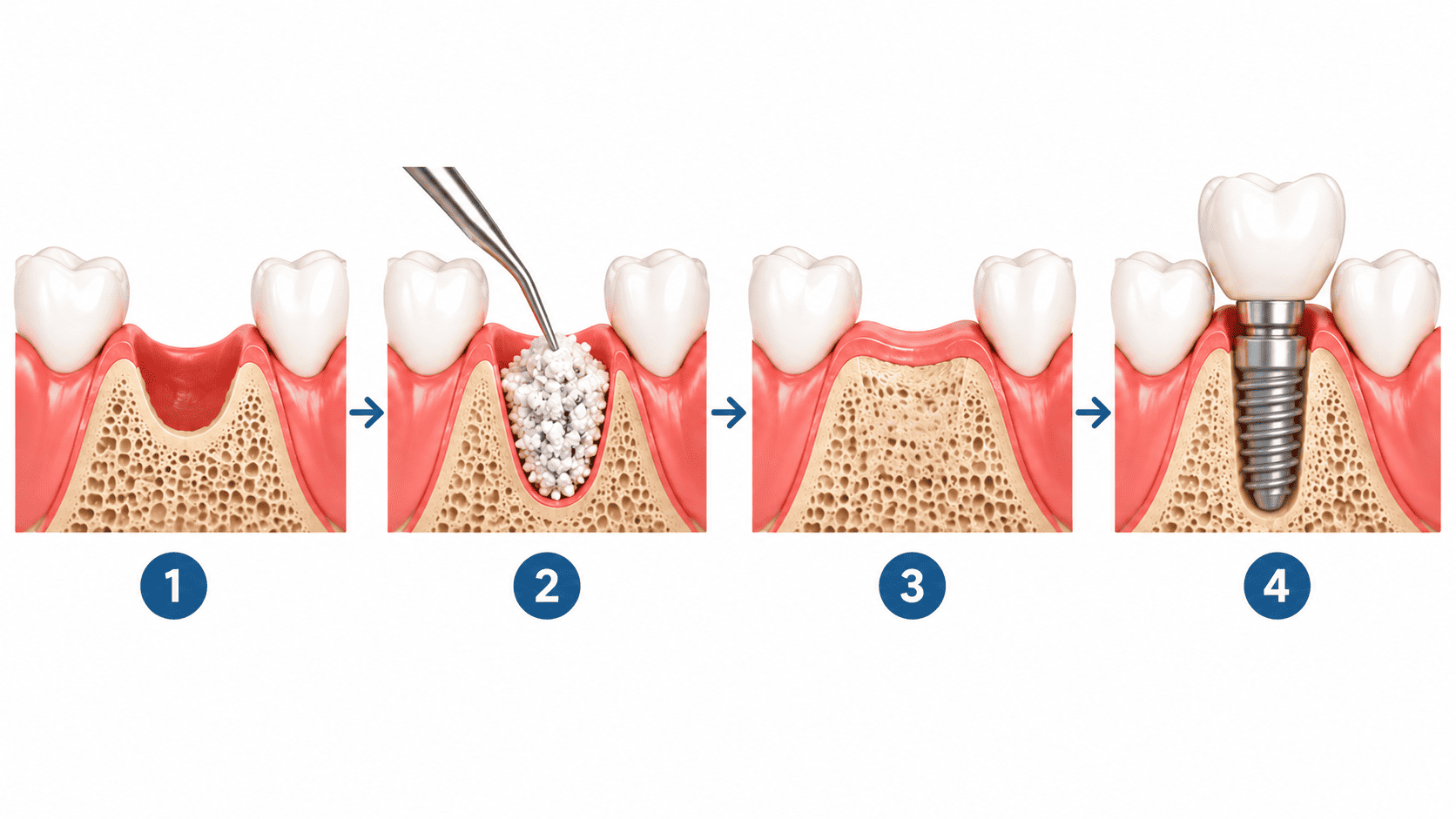
Sometimes grafting is folded into a procedure you are already having. Ridge preservation is the term for placing graft material into a socket at the time a tooth is removed, with the goal of limiting how much bone is lost as the site heals. It is a routine part of implant-focused care and is taught alongside implant placement as a core surgical skill.
Ridge preservation is worth asking about if you know a tooth cannot be saved. Handling the socket at the time of extraction can sometimes reduce how much rebuilding is needed later, though it does not guarantee that no further grafting will be required. Your periodontist can tell you whether it makes sense for your specific tooth.
Sinus Augmentation for Upper Back Teeth
The upper back of the mouth has a complication the lower jaw does not: the sinus cavity sits directly above the roots. When teeth in that area are lost and the bone thins, there may be very little distance between the mouth and the sinus floor. Sinus augmentation is the procedure used to build that bone back up so an implant can be placed safely.
Alveolar ridge and sinus augmentation techniques are well established in periodontal and oral surgery practice, and graft materials have been studied in combination with growth factors to support healing. If your missing tooth is a molar or premolar in the upper jaw, expect this topic to come up during your consultation.
What Happens During a Bone Graft Procedure
Once the graft material has been placed, the tissue is closed with stitches. From there, the goal is straightforward: the graft material needs to heal and integrate with the surrounding bone so it becomes part of a stable ridge. The graft acts as a scaffold, and your body gradually replaces and remodels it.
Graft materials vary. Depending on your case, your surgeon may use bone taken from your own body, processed donor bone such as freeze-dried bone allograft, or another material selected for the size and shape of the defect. Each option has tradeoffs in healing and cost, and your periodontist should walk you through which one fits your situation.
Does Every Implant Patient Need a Graft?
No. Many people have enough bone volume for implant placement without any grafting at all, particularly when a tooth was recently lost and the socket was preserved. Others need only a small amount of grafting at the same appointment as the implant, while a smaller group needs a separate grafting procedure with a healing period in between.
This is the main reason a consultation matters more than internet research. Two patients with the same missing tooth can have very different bone profiles, and the recommendation follows the imaging, not the diagnosis alone.
Timing: Graft First, Then Implant
When a graft is required, it is usually completed before the implant is placed so the new bone has time to mature. That adds a phase to treatment, and patients notice it. One patient described needing grafts on one side of the mouth, then addressing the other side afterward, and noted that this sequence lengthened the overall time before the final crowns were finished.
Staging treatment this way is not unusual when both sides need work, because it lets each graft heal without overloading you in a single surgery. Your periodontist will give you a realistic sequence and explain which steps can be combined and which cannot. Ask for the full timeline in writing so you know what to expect.
What the Healing Period Involves
After grafting, you will have instructions about eating, cleaning, and what to avoid around the site. Most of the early healing happens quietly, and the main job is protecting the graft so it is not disturbed. Swelling and soreness are common after surgical grafting, and your practice will tell you what to use and when to call.
Healing timelines vary by the size of the graft, the location, and your overall health. Rather than guessing at a number of months, ask your periodontist when they expect the site to be ready for implant placement and what signs would change that estimate.
Comfort During the Procedure
Bone grafting is performed with local anesthesia, and many practices offer additional sedation options for patients who are anxious or who are having a longer procedure. The most common patient concern is pain, and the honest answer is that discomfort varies from person to person and depends on the size of the graft and the site.
What you can control is preparation. Share your full medical history, list every medication and supplement you take, and ask directly what the first two days after surgery will feel like at this practice. That conversation tells you more than a general description ever could.
Cost and Insurance Questions to Ask
Grafting is billed separately from the implant itself, and the total depends on how much bone needs to be rebuilt, which material is used, and whether a sinus lift or ridge preservation is involved. Dental insurance may cover part of the grafting when it is tied to an extraction or a covered procedure, and may exclude it when it is considered part of implant treatment.
Because none of those details can be assumed in advance, ask your practice for a written estimate that separates the graft, the implant, the abutment, and the crown. Also ask what your insurance is expected to pay and what you would owe. Getting this in writing before surgery prevents surprises later.
Getting Evaluated in Timonium
West Periodontics & Dental Implants is a periodontal specialty practice in Timonium, Maryland, serving adults in Timonium, Lutherville, and the greater Baltimore area. The practice is led by board-certified periodontists and focuses on the diagnosis and treatment of gum disease along with surgical dental implant placement.
Bone grafting for jawbone restoration is one of the practice’s core services, alongside dental implants with guided implant surgery, gum grafting for recession, gum disease treatment, and tooth extractions. If you have been told you need a graft, or you are simply missing a tooth and want to know whether an implant is possible, a consultation is the starting point.
Questions to Bring to Your Consultation
Showing up with a short list keeps the appointment focused and gets you answers you can act on. Consider asking:
- Based on my imaging, do I need a graft before an implant, or can the implant be placed now?
- Which type of graft material do you recommend for my case, and why?
- Can the graft and the implant be done in the same visit, or are they separate procedures?
- What is the expected sequence and total timeline for my treatment?
- What will the graft cost, and what portion does my insurance cover?
- What does recovery look like, including restrictions on eating and activity?
- What are the risks if I decide to delay or skip grafting?
Those last two questions matter most. Understanding the tradeoffs helps you decide whether to move forward now or take time to plan, and a good periodontist will welcome the conversation rather than rush it.
Frequently Asked Questions
Do I need a bone graft before an implant?
Only an exam with imaging can answer that for you. Many patients have enough bone for implant placement without grafting, while others need it because of low bone density, advanced gum disease, or bone loss after an extraction. Your periodontist will compare the available bone at the site against what the implant requires and explain the recommendation.
How long after a bone graft can an implant be placed?
Timing depends on the size and location of the graft and how your body heals. Some grafts are done at the same appointment as the implant, while larger ones need a separate healing period before placement. Ask your periodontist for the expected schedule for your case and what could extend it.
How much does a bone graft for dental implants cost?
Costs vary widely based on how much bone needs rebuilding, the graft material selected, and whether a sinus lift or ridge preservation is part of the plan. Grafting is typically billed separately from the implant and crown. Request a written estimate that breaks out each component and shows what insurance is expected to cover.
How painful is a bone graft for a dental implant?
Grafting is performed with local anesthesia, and sedation options are often available for anxious patients. Discomfort afterward varies with the size of the graft and the site, and most people manage it with the instructions their practice provides. Ask what to expect during the first two days so you can plan accordingly.
Can I skip the graft and get the implant anyway?
You can ask, but the answer is usually no when bone volume is insufficient. An implant placed into inadequate bone may not integrate properly or may fail over time, which means more treatment and expense later. If you want a second opinion on the recommendation, that is a reasonable request before committing to surgery.