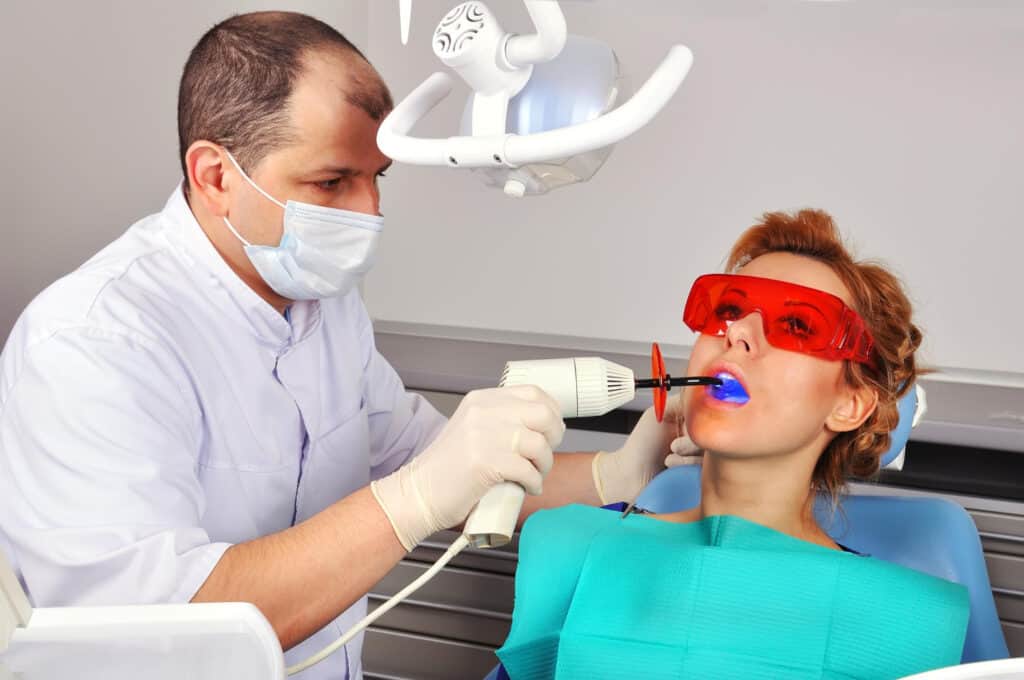
Gum disease affects the soft tissue and bone that hold your teeth in place. It can develop quietly, and many people do not realize they have it until a dentist or periodontist finds signs during a routine exam. For patients in Timonium, MD, laser surgery has become a frequently discussed treatment option for managing gum disease, and laser technology is now used across many areas of healthcare in the Timonium area, from dental procedures to medical treatments.
If your periodontist has mentioned laser gum surgery, you may be wondering whether it is the right choice for your situation. The answer depends on the severity of your condition, your overall oral health, and the treatment plan your periodontist recommends. Here is a closer look at how laser gum surgery works, what it can and cannot do, and what you should consider before making a decision.
What Is Laser Gum Surgery?
Laser gum surgery uses focused light energy to treat diseased gum tissue. Unlike traditional approaches that rely on scalpels and sutures, laser treatment is designed to remove infected tissue and bacteria while preserving as much healthy tissue as possible. Periodontists use different types of lasers for different procedures, and each type delivers energy in a precise way.
One well-known approach is the laser-assisted new attachment procedure, commonly called LANAP. This protocol is used to treat advanced gum disease without the need for scalpel surgery. Another option is the CO2 laser, which uses light energy to perform a wide range of periodontal dental procedures without the noise, vibration, and pressure often associated with the dental drill. For many patients, the absence of these sensations makes the experience more comfortable than they expected.
How Laser Gum Surgery Treats Gum Disease
At West Periodontics & Dental Implants in Timonium, MD, laser technology is used to treat gum disease by removing infected tissue and bacteria from the areas around the teeth. The laser targets diseased tissue while leaving healthier tissue intact, which can support a smoother healing process.
Laser therapy is often described as a conservative, effective alternative to traditional gum surgery. Because it is less invasive than scalpel-based procedures, it may be appropriate for patients who want to avoid a more involved surgical experience. Your periodontist will evaluate the depth of your periodontal pockets, the condition of your gums, and the amount of bone support you have to determine whether laser treatment fits your clinical picture.
Periodontists have advanced training and experience in treating and managing gum disease. This specialized background matters because gum disease is not a surface condition. It affects the supporting structures beneath the gums, and effective treatment requires a thorough understanding of how those structures respond to infection and healing.
Laser Gum Surgery vs. Traditional Gum Surgery
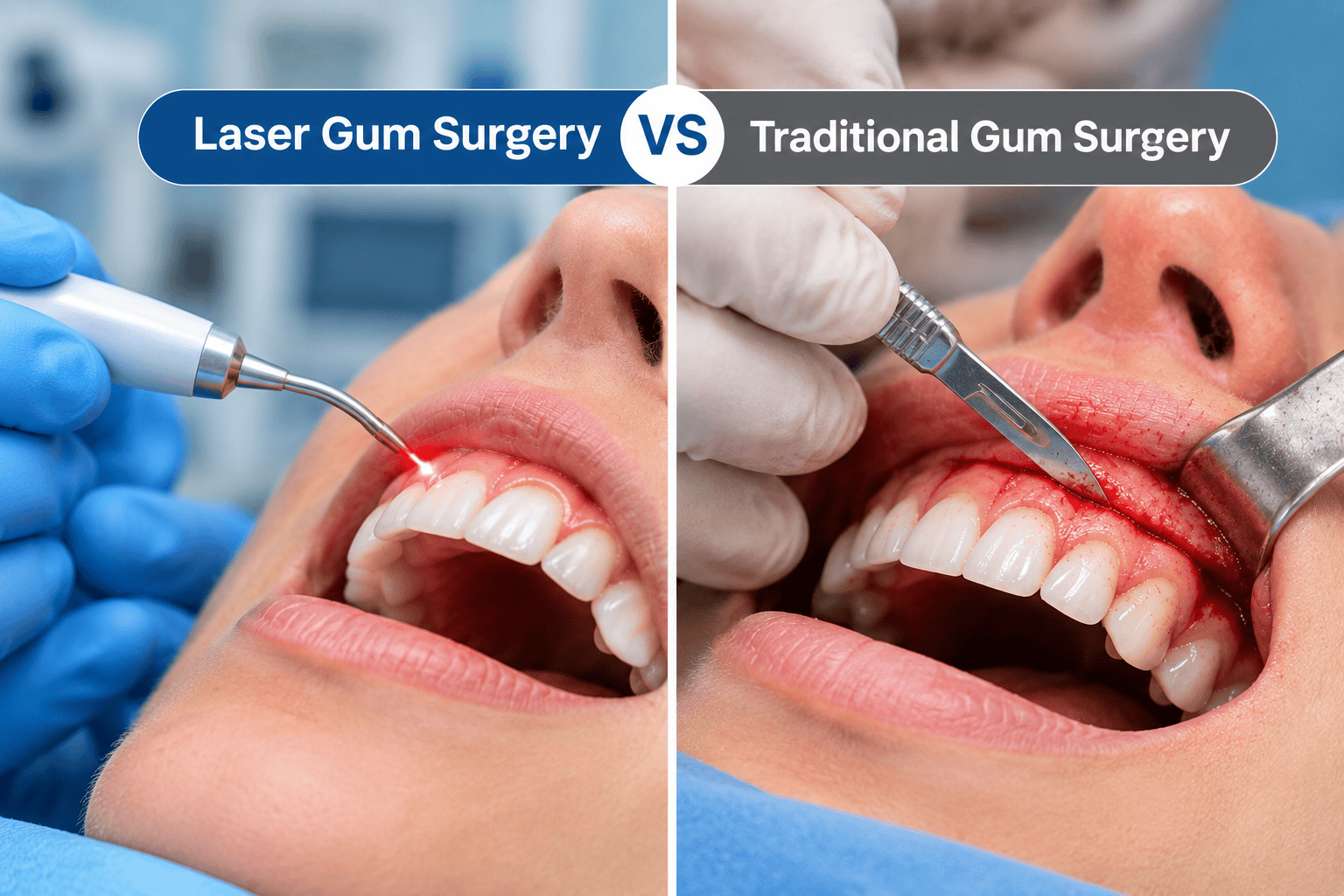
The main difference between laser gum surgery and traditional gum surgery comes down to technique. Traditional surgery uses a scalpel to cut and lift the gum tissue so the periodontist can access the roots of the teeth and remove diseased tissue. Stitches are often needed afterward, and healing can take more time.
Laser gum surgery was designed to be less invasive than traditional approaches. It typically involves less cutting, and many patients find the healing period easier than they expected. The laser seals tissue as it works, which can reduce bleeding during the procedure. Because there is no scalpel and no suturing in many cases, the recovery experience can feel different from what patients associate with gum surgery.
It is important to understand that laser surgery is not a stand-alone cure for gum disease. It is a tool that a periodontist may use as part of a complete treatment plan that also addresses the underlying causes of the infection. Those causes may include plaque buildup, poor oral hygiene habits, or other factors that contribute to inflammation. A responsible periodontist will combine laser treatment with the other steps needed to keep gum disease from returning.
Are You a Candidate for Laser Gum Surgery?
Candidacy for laser gum surgery depends on several factors. Patients with mild to moderate gum disease may respond well to laser therapy, especially when it is combined with scaling and root planing and improved home care. Patients with more advanced disease may still benefit, but their periodontist will need to assess whether laser treatment alone can address the damage beneath the gums.
Your overall health also plays a role. Certain medical conditions and medications can affect how your gums heal, so your periodontist will review your health history before recommending any surgical procedure. Smokers and patients with poorly controlled diabetes may have different healing responses, and those factors need to be considered in the treatment plan.
The best way to determine whether you are a candidate is to schedule a periodontal evaluation. During the exam, your periodontist will measure your gum pockets, take images of your bone support, and discuss your symptoms. Based on those findings, you will receive a recommendation that fits your specific needs rather than a one-size-fits-all answer.
What to Expect During Recovery
Recovery is often the part of gum surgery that patients worry about most. The good news is that laser gum surgery was designed to be less invasive than traditional approaches, and many patients find the healing period easier than they expected. If you are scheduled for laser gum surgery in Timonium, understanding the recovery process can help you plan your time off, prepare your home, and feel confident about what comes next.
Your periodontist will give you specific instructions for the days following your procedure. It is common to be advised to rest for the remainder of the day and to avoid strenuous activity while your gums begin to heal. You may also be told to stick to softer foods for a short period and to be gentle when brushing near the treated areas.
Discomfort after laser gum surgery is typically manageable. Some patients notice mild soreness or swelling, and your periodontist may recommend over-the-counter pain relief or prescribe medication if needed. The key is to follow your aftercare instructions closely and to attend any follow-up visits so your healing can be monitored.
Most patients can return to their normal routines within a day or two, although the exact timeline varies from person to person. Your periodontist will let you know when it is safe to resume your regular brushing and flossing routine and when you should return for a follow-up evaluation.

Why See a Periodontist for Laser Gum Surgery?
A periodontist is a dental specialist who focuses on the prevention, diagnosis, and treatment of gum disease and the placement of dental implants. Their advanced training goes beyond general dentistry, giving them the skills needed to manage complex cases involving the gums and the bone that supports the teeth.
This expertise matters when lasers are involved. Laser gum surgery requires precise judgment about how much tissue to treat, how to shape the treated area, and how to support reattachment of the gums to the teeth. A periodontist who performs laser procedures regularly can tailor the treatment to your anatomy and your specific disease pattern.
Making Your Decision
So is laser gum surgery right for you? The answer starts with a thorough evaluation. Gum disease affects the soft tissue and bone that hold your teeth in place, and leaving it untreated can lead to more serious problems over time. If your periodontist finds signs of active disease, treatment should not be delayed.
Laser gum surgery offers a conservative option for many patients, but it is not the only option, and it is not a cure by itself. It works best as part of a complete treatment plan that includes professional cleanings, improved home care, and regular monitoring. Your periodontist in Timonium will explain what your condition requires and why a particular approach is being recommended for you.
If you have been told you need gum surgery and you want to explore less invasive alternatives, ask your periodontist whether laser treatment is appropriate for your case. A periodontist who offers both traditional and laser approaches can give you an honest comparison based on your exam findings rather than pushing a single technique.
Care for Your Gums in Timonium
West Periodontics & Dental Implants provides periodontal care to patients in Timonium, MD, and the surrounding area. The practice offers dental implants, gum grafting, and laser treatments for a healthy smile. For more information or to schedule a consultation, contact the Timonium office at (410) 252-0871.
Frequently Asked Questions
Can gum disease be cured with laser surgery alone?
No. Laser surgery is a tool that a periodontist uses as part of a complete treatment plan, not a stand-alone cure. Effective management of gum disease also depends on removing plaque and bacteria above and below the gumline, improving daily oral hygiene, and attending regular follow-up visits to prevent the disease from returning.
Who performs laser gum surgery?
Laser gum surgery is typically performed by a periodontist, a dental specialist with advanced training and experience in treating and managing gum disease. This specialized training allows the periodontist to evaluate the supporting structures of the teeth, determine the appropriate laser approach, and monitor healing after the procedure.
Is laser gum surgery less painful than traditional gum surgery?
Laser gum surgery was designed to be less invasive than traditional approaches, and many patients find the healing period easier than they expected. Because the laser removes infected tissue and bacteria without a scalpel, patients often experience less bleeding and a more comfortable recovery. Your periodontist can provide specific guidance based on your procedure.
How soon can I return to normal activities after laser gum surgery?
Many patients are able to resume their normal routines within a day or two, but the exact timeline depends on the extent of the treatment and how your body responds. Your periodontist will advise you on when it is safe to return to work, exercise, and your regular brushing and flossing routine.
Deciding whether laser gum surgery is right for you starts with an honest conversation with a periodontist who can examine your gums and explain your options clearly. If you are experiencing signs of gum disease or have been told that treatment is needed, contact West Periodontics & Dental Implants in Timonium to schedule a periodontal evaluation and learn more about how laser gum surgery could fit into your care plan.