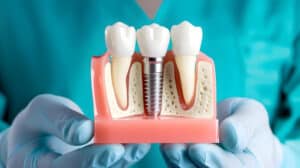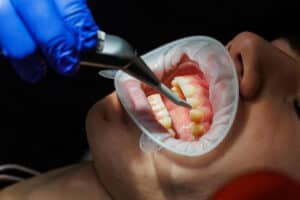

Dental implants offer a long-term solution for missing teeth, and the technology used to place them has advanced significantly. For patients in Timonium, 3D imaging and guided implant placement combine detailed digital scans with careful surgical planning. The result is a procedure that is safer, more accurate, and often less invasive than people expect.
If you are exploring dental implants after losing a tooth, you may have questions about the process. Understanding how 3D imaging works, how guided surgery is performed, and what happens during a consultation can help you feel prepared and confident about your care.
What Is 3D Guided Implant Placement?
3D guided implant placement, also known as computer-guided implant surgery, is an advanced technique that brings together digital imaging, virtual planning, and 3D printing. Instead of relying on visual estimates alone, the periodontist maps the entire procedure on a computer screen before surgery begins.
Advanced digital imaging and computer software create an accurate map of your mouth. This map shows the shape of the jaw, the position of remaining teeth, and the spaces where implants are needed. The process uses 3D imaging and digital planning software to map out dental implant placement in advance, so every angle, depth, and position is evaluated before the first step of surgery.
For the patient, this means less guesswork and a clearer picture of the intended result. The plan is not created at the surgical chair; it is built carefully beforehand.
The Role of CBCT 3D Imaging
Before an implant can be placed, the periodontist needs a clear view of the bone beneath the gums. This is where CBCT, or cone beam computed tomography, becomes essential. CBCT 3D imaging and guided implant surgery are available at dental practices in the Timonium area, and the scan provides the foundation for the entire treatment plan.
3D imaging eliminates guesswork, giving the dentist a clear view of the jawbone’s dimensions and density. That information helps determine whether the bone is strong enough to support an implant, which implant size to use, and where the implant should be positioned.
The scan also reveals important structures, including nerves and sinus cavities, so they can be carefully avoided. The result is a more accurate, safer approach to treatment. For patients, the scan is quick and comfortable. You sit while the imaging unit rotates around your head, and the images are ready within minutes.
Guided Surgery vs. Non-Guided Implant Surgery
Patients sometimes wonder how guided implant surgery compares with the traditional, non-guided approach. Both methods can produce successful results, but they rely on different tools and techniques.
| Guided Surgery | Non-Guided Surgery |
|---|---|
| Uses digital imaging, 3D printing, and surgical guides for precise implant placement | Relies on clinician skill and tactile feedback during the procedure |
| Implant position is planned in advance with virtual 3D software | Implant position is guided by the surgeon’s hands-on judgment |
Guided surgery uses digital imaging, 3D printing, and custom guides for precise implant placement. The periodontist creates the plan virtually, then uses a 3D printer to produce a surgical guide that fits over the teeth or gums. During the appointment, the guide directs the implant into the exact position that was planned on screen.
Non-guided surgery relies on the clinician’s skill and tactile feedback. The periodontist assesses the site during the procedure and uses experience and feel to guide the placement. This approach has a long history of success, but it leaves more decisions to the moment of surgery.
What to Expect During the Digital Planning Process
For patients, the digital planning process follows a clear series of steps:
- Consultation and examination. The periodontist reviews your dental history, examines your gums and remaining teeth, and discusses your goals.
- CBCT scan. A three-dimensional image measures the jawbone and identifies important anatomical landmarks.
- Virtual planning. Specialized software is used to map the optimal implant positions for strength, safety, and appearance.
- Surgical guide design. A custom guide is created to match your anatomy and the planned positions.
- Guided placement. On the day of surgery, the guide helps direct the implant to the pre-planned position.
Each step builds on the one before it. By the time you arrive for the placement appointment, the periodontist knows exactly where the implant should go, how deep it should sit, and what angle it should follow.

Benefits of 3D Guided Implant Placement
The advantages of 3D guided surgery are most meaningful to the patient, who experiences them as a smoother procedure and a stronger long-term result.
- Improved accuracy. Virtual 3D planning allows implant positioning with improved accuracy compared with placement based on estimates alone.
- Enhanced safety. Detailed imaging helps the team avoid nerves and other structures, supporting a safer procedure.
- Less invasive surgery. Real-time, turn-by-turn guidance supports less invasive surgery and more precise implant placement.
- Better aesthetic outcomes. Precise positioning ensures optimal implant placement for aesthetic considerations, helping the final restoration look natural.
- Fewer unknowns. Because the procedure is fully planned in advance, both you and your periodontist know what to expect.
The technology does not replace clinical skill; it enhances it. When an experienced periodontist uses 3D imaging and guided placement, patients benefit from a plan that is both individualized and exact.
Preparing for a Timonium Implant Consultation
If you are considering dental implants in Timonium, the first step is a consultation with a periodontal specialist. During this visit, the periodontist will ask about your dental and medical history, examine your gums and bite, and listen to your treatment goals.
If implants appear to be a good option, the conversation moves to imaging and planning. You may have a CBCT scan at a follow-up appointment or during the same visit. The periodontist will then explain the findings and recommend a treatment plan based on the images.
In some cases, the scan may show that the jawbone needs additional support. Bone grafting can restore the jawbone so it is strong enough to hold an implant. If grafting is needed, the periodontist will explain the timing and how it fits into the overall process. The goal is to create a stable foundation before the implant is placed.
At a Timonium periodontal practice staffed by board-certified periodontists, you can expect a thorough evaluation, clear communication, and a treatment plan tailored to your needs. Guided implant placement is one of the tools available to help ensure the best possible outcome.
Frequently Asked Questions
Here are answers to common questions about 3D imaging and guided implant placement.
How accurate is 3D guided implant placement compared with traditional placement?
3D guided implant placement can improve the accuracy and predictability of dental implant positioning compared with freehand techniques. The process uses 3D imaging and virtual treatment planning to determine the implant’s planned position before surgery. A custom surgical guide can then help the periodontist transfer that plan to the patient’s mouth. However, the actual accuracy can vary depending on the patient’s anatomy, imaging quality, surgical technique, and type of guide used.
Is guided implant surgery more or less invasive than traditional surgery?
Guided implant surgery may allow for a more conservative surgical approach in selected cases because the implant position is planned in advance. The surgical guide helps direct the instruments according to the treatment plan. However, whether the procedure is less invasive depends on factors such as bone availability, the number of implants, and whether additional procedures such as bone grafting are required.
What is a CBCT scan, and does it hurt?
CBCT stands for cone beam computed tomography. It is a 3D imaging technique used to evaluate the jawbone and surrounding structures during dental implant planning. The scan is quick and noninvasive. You simply remain still while the scanner captures detailed images of your teeth, jawbone, nerves, and nearby anatomical structures.
How do I know if I am a candidate for guided implant placement?
A consultation with a periodontal specialist is the best way to determine whether guided implant placement is right for you. The periodontist will review your dental history, examine your gums, and take 3D imaging if needed. If the scan shows that the jawbone is thin or deteriorated, bone grafting may be recommended before the implant can be placed.