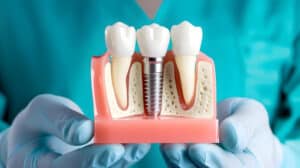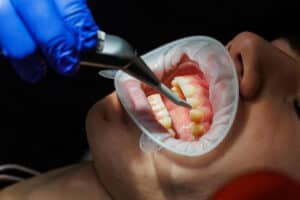

Replacing a missing tooth is a significant decision that affects more than the appearance of your smile. Dental implants have become a trusted solution for patients in Timonium because they restore both function and structure, allowing people to chew, speak, and smile with confidence. For many years, implants were placed using traditional freehand techniques that relied primarily on the surgeon’s experience and two-dimensional X-rays. Today, guided dental implant surgery offers a more refined approach. By using 3D imaging and careful digital planning before the procedure begins, guided surgery gives your periodontist a detailed view of your jaw and teeth. The result is a more predictable treatment plan, greater precision during placement, and a recovery that many patients find more comfortable.
Understanding Guided Dental Implant Surgery
Guided dental implant surgery is an advanced technique that combines digital imaging with computer-assisted planning. Before surgery, 3D imaging creates a detailed picture of your jawbone, nerves, sinuses, and existing teeth. Your periodontist uses this information to determine the ideal position, angle, and depth for the implant. That plan is then used during the procedure, guiding placement with a level of accuracy that is difficult to achieve with traditional methods alone. Because the entire approach is mapped out in advance, the surgical team knows exactly what to expect before the appointment begins.
Guided surgery reflects a broader shift toward technology-assisted dental care. Digital tools allow the treatment team to evaluate your anatomy ahead of time, anticipate challenges, and prepare accordingly. For complex cases, such as replacing multiple teeth or working around dense bone, the digital plan gives the surgeon a clear roadmap. For simpler cases, it still provides an added layer of confidence and efficiency. The combination of careful planning and accurate execution is what sets this approach apart.
How Guided Surgery Compares to Traditional Implant Placement
Traditional implant placement has a long history of success, but it depends heavily on the surgeon’s visual judgment. The surgeon views the site, makes an incision, and positions the implant based on measurements taken during the appointment. Guided surgery changes that dynamic. Because the implant position is planned digitally in advance, the surgeon follows a precise path during placement rather than estimating in the moment.
| Aspect | Traditional Placement | Guided Implant Surgery |
|---|---|---|
| Planning method | Manual measurements and standard X-rays | 3D imaging and digital planning |
| Implant positioning | Determined during surgery | Planned in advance with computer-assisted accuracy |
| Invasiveness | Can require more tissue exposure | Less invasive placement |
| Surgical time | Often longer | Reduced surgical time |
| Recovery | Conventional timeline | Shorter healing time in many cases |
| Unexpected complications | Possible | Extremely low risk |
The benefits of guided surgery apply to both the surgeon and the patient. For the doctor, computer-assisted tools provide information that improves accuracy and efficiency. For the patient, that same preparation translates into a shorter, more comfortable procedure and a better chance of a smooth outcome. Studies of guided implant surgery note that computer programs allow the oral surgeon to place tilted dental implants in dense cortical bone with a high level of control.
The Main Benefits of Guided Dental Implant Surgery
Patients considering tooth replacement in Timonium should understand what guided surgery offers. The advantages are supported by research and clinical experience, and they compare well with traditional approaches in several important areas.
More Accurate Implant Positioning
Guided surgery delivers measurable improvements in implant positioning when compared with traditional approaches. The 3D imaging used before surgery gives your periodontist a precise picture of your jaw, so the implant can be angled and positioned to match your natural bite and anatomy. This level of accuracy helps the implant support the restoration properly and allows for a more natural look once the final crown is attached. Computer-guided systems also make it possible to place tilted implants in dense areas of the jawbone when needed, giving the surgeon more flexibility in challenging cases.
Greater Safety Around Nerves and Sinuses
One of the most important benefits of guided surgery is the added safety it provides. The digital plan shows the exact location of nerves, sinuses, and other vital structures, and the surgical guide helps the doctor work around them. That planning reduces the chance of surprises during the procedure. Fewer unexpected complications mean less worry for the patient and a smoother experience overall. People who have limited bone or who are concerned about nerve damage may feel more at ease knowing that the treatment was mapped out carefully before the first incision.
A Less Invasive Procedure With Less Discomfort
Because the implant position is planned in advance, guided surgery can often be performed with a smaller incision. A less invasive approach means less disruption to the surrounding gum tissue, which translates to reduced patient stress and discomfort during and after the procedure. The reduced surgical time also shortens the amount of time spent in the dental chair. For patients who feel nervous about oral surgery, knowing that the process is faster and gentler can make a meaningful difference.
Faster Healing and a Lower Risk of Complications
Guided implant surgery may allow for a shortened healing time. When the implant is placed with accuracy and the surrounding tissue is handled gently, the body can recover more quickly. Research also points to an extremely low risk of complications with guided surgery. Since the positioning is based on careful digital planning rather than estimation, the chances of encountering an issue after placement are reduced. For many patients in Timonium, a faster recovery means less time away from work and everyday activities.
Improved Long-Term Outcomes
Implants placed with accuracy are more likely to last. The stability achieved through guided surgery supports better long-term outcomes, which matters when making a commitment to your oral health. Guided surgery does more than bring back your smile, it restores your oral health and boosts your confidence. A well-placed implant integrates better with the jawbone and provides a dependable foundation for a natural-looking crown. That combination of accuracy, comfort, and durability is one reason why many patients choose guided surgery for tooth replacement.

How Guided Surgery Supports Your Smile and Your Oral Health
Beyond the technical advantages, guided implant surgery has a meaningful effect on how patients feel about their smile. Missing teeth can affect self-confidence, making people hesitant to laugh or speak in social settings. By enabling a natural-looking, stable result, guided implants help patients regain the confidence that comes with a complete smile.
The advantages also carry over to long-term oral health. Accurate implant placement supports the surrounding teeth and jawbone, which helps maintain the structure of the face over time. When a restoration is well positioned, it distributes bite forces evenly and makes cleaning easier. For patients in Timonium who are weighing their options, those benefits matter not only for today but for the years ahead.
Why Guided Implant Surgery Is a Strong Choice in Timonium
Patients in Timonium and the surrounding Lutherville area have access to advanced periodontal care close to home. West Periodontics & Dental Implants is a periodontal specialty practice offering guided implant surgery alongside treatments for gum disease, bone loss, gum recession, and tooth extractions. The practice is led by board-certified periodontists who bring focused expertise to implant placement and restoration.
For local patients, guided surgery offers a chance to restore oral health and confidence with a procedure designed around modern technology. If you are missing a single tooth or need a more complex restoration, having a thorough digital plan in place can make the process more predictable and comfortable. If you are researching tooth replacement options, a consultation with a periodontist who offers guided implant surgery can clarify what the technique means for your specific needs.
Frequently Asked Questions
How long does healing take after guided implant surgery?
Every patient heals at a different pace, but guided surgery may allow for a shortened healing time compared with traditional approaches. The less invasive nature of the procedure and the accuracy of implant placement help minimize trauma to the surrounding tissue. Your periodontist will provide specific aftercare instructions based on your treatment plan. Most patients can expect some soreness in the days after surgery, with gradual improvement as the implant begins to integrate with the jawbone.
Is guided dental implant surgery more accurate than traditional placement?
Yes. Guided implant placement offers measurable improvements over traditional approaches, including more accurate positioning and greater safety. The use of 3D imaging and computer-assisted planning allows the periodontist to determine the ideal position for the implant before surgery begins, and a surgical guide helps ensure the implant is placed as planned. Traditional placement relies more on visual judgment during the procedure, which makes guided surgery a distinctly more precise option.
Who is a good candidate for guided dental implant surgery?
Most patients who need a dental implant can be considered for guided surgery. The technique is especially helpful when there is limited bone, when implants need to be placed at an angle, or when the implant site is close to nerves or sinuses. Patients with a single missing tooth or multiple missing teeth may both benefit. A thorough evaluation with 3D imaging will help your periodontist determine whether guided surgery is suitable for your situation.
Does guided implant surgery take less time than traditional placement?
Guided surgery is associated with reduced surgical time. Because the implant position is planned in advance and the procedure is carried out with a surgical guide, there is less guesswork during the appointment. Shorter operating time not only makes the experience more comfortable for the patient, but it can also reduce stress and support a smoother recovery. The total timeline from your first consultation to your final restoration will still depend on your individual treatment plan.